A Deep Dive into Lorikeet Security's PTaaS Solution for SaaS
Is your team relying on AI-assisted code reviews to catch every vulnerability before you deploy? While LLMs like Claude and Copilot are revolutionizing the secure software development lifecycle (SDLC), our recent analysis at "SaaS & Chill" suggests that the "AI-only" approach creates a dangerous survivorship bias in your security posture. We’ve been tracking Lorikeet Security, a modern Penetration Testing as a Service (PTaaS) firm that has carved out a niche for the 2026 development landscape. Founded in 2021, Lorikeet operates on the empirical reality that as AI closes the door on low-hanging fruit—like basic SQL injection or Cross-Site Scripting (XSS)—the residual risk surface migrates to complex runtime environments and infrastructure configurations. Their methodology isn't about competing with AI; it’s about validating the gaps that LLMs are structurally incapable of seeing.
The Residual Risk Surface: Beyond the LLM Horizon
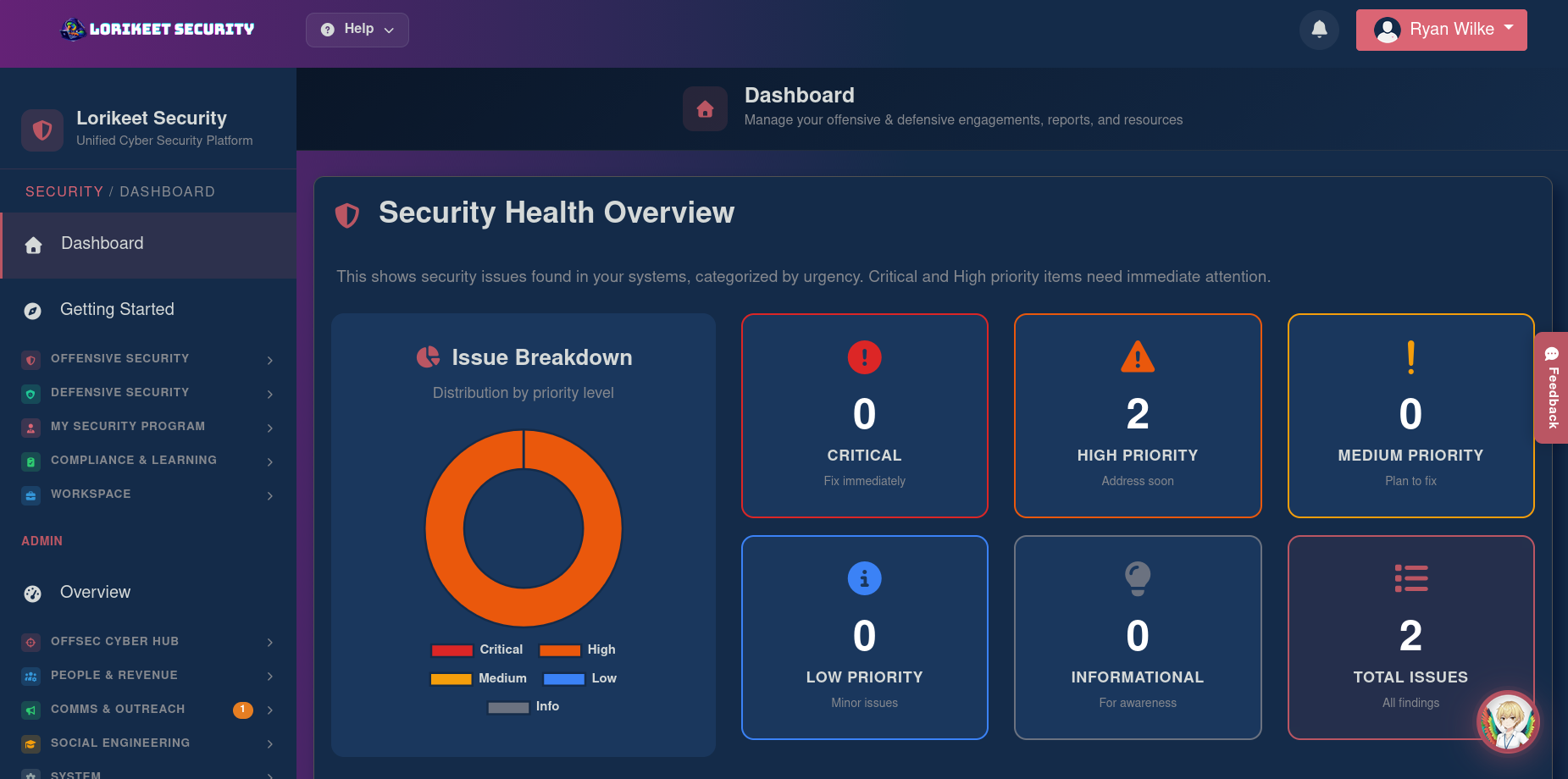
The technical philosophy at Lorikeet Security centers on the "Pentest-as-a-Service" (PTaaS) model, moving away from the static PDF reports of yesteryear toward a dynamic, API-integrated delivery system. Their architecture is designed for "busy builders" who require real-time feedback loops. In a recent case study involving Flowtriq—a workflow automation platform—the data revealed a fascinating shift in the vulnerability landscape. Flowtriq utilized an exhaustive Claude-driven security audit that effectively neutralized code-level vulnerabilities. However, Lorikeet’s manual intervention identified five critical findings—ranging from High to Low severity—that existed entirely outside the source code's logic. This highlights a design principle where manual offensive security acts as the final verification layer for infrastructure-as-code (IaC) and complex session states that static analysis tools often misinterpret or overlook.
Architecture & Design Principles
Lorikeet’s platform is built to mirror the modern SaaS stack, prioritizing low-latency communication and high-fidelity reporting. Their PTaaS portal acts as a centralized command center where live findings are streamed via a secure WebSocket connection, allowing developers to begin remediation before the full engagement concludes. The system is architected for high concurrency, supporting continuous Attack Surface Management (ASM) alongside point-in-time manual tests.
A key technical decision in their design is the integration of human-led offensive logic with automated scanning telemetry. By deploying a "Vibe Check" on the infrastructure, Lorikeet’s engineers look for logic flaws—such as race conditions in session management or reverse-proxy header misconfigurations—that require contextual understanding of the business logic. This hybrid approach ensures that the scalability of their ASM tool doesn't sacrifice the depth of a manual deep-dive, making it a robust choice for teams managing complex, multi-cloud environments.
Feature Breakdown
Core Capabilities
- Dynamic PTaaS Portal: Unlike traditional firms, findings are delivered through a real-time dashboard. This allows for immediate "triage and fix" cycles, reducing the Mean Time to Remediation (MTTR) by integrating directly into the developer's workflow.
- Continuous Attack Surface Management (ASM): The platform doesn't sleep. It continuously maps the external perimeter, identifying shadow IT and orphaned subdomains that frequently crop up during rapid scaling or M&A activity.
- Specialized AI-Native Auditing: They specifically target vulnerabilities introduced by AI integrations, such as prompt injection vectors or insecure handling of LLM outputs within the application UI.
Integration Ecosystem
Lorikeet identifies as a "builder-friendly" tool, offering deep integration into the modern DevOps toolchain. Their reporting and live chat features are designed to plug into existing communication silos, ensuring that security findings aren't trapped in an inbox. While they provide a centralized portal, the emphasis is on the "Real-time Chat" feature, which connects developers directly with the offensive security engineers. This removes the friction of "finding-to-explanation" lag, allowing for instant clarification on complex exploits like runtime TLS posture issues or file-system hygiene.
Security & Compliance
For SaaS founders, compliance is often the primary driver for a pentest. Lorikeet covers the full spectrum of enterprise readiness, including SOC 2, HIPAA, PCI-DSS, HITRUST, and FedRAMP. They don't just "check the box"; they provide practitioner-built offensive validation that satisfies auditors while actually hardening the system. Their data handling protocols ensure that sensitive vulnerability data is encrypted at rest and in transit, maintaining a secure perimeter for the client's most sensitive architectural secrets.
Performance Considerations
In the world of offensive security, performance is measured by "Signal-to-Noise" ratio. Lorikeet’s manual-heavy approach ensures that developers aren't chasing false positives—a common failure of automated DAST tools. By filtering findings through expert analysts before they hit the PTaaS portal, the resource usage of the internal engineering team is optimized. The speed of delivery is accelerated through their "live findings" model, which bypasses the traditional two-week wait for a final report.
How It Compares Technically
When compared to legacy firms like NetSPI or Bishop Fox, Lorikeet feels significantly more "SaaS-native." Traditional firms often struggle with the velocity of modern CI/CD pipelines, delivering static reports that are obsolete by the time they are read. Compared to automated-only platforms like HackerOne (specifically their automated scanning tiers) or Intruder, Lorikeet provides a much deeper "Vibe Check." While Intruder is excellent for automated vulnerability scanning, it lacks the human intuition required to find the "session management edge cases" that Lorikeet identified in the Flowtriq study.
Developer Experience
The developer experience (DX) is where Lorikeet shines for weekend projects and enterprise builds alike. The documentation of findings is clear, actionable, and includes reproduction steps that actually work. There is an evident focus on "Relaxed reviews"—the engineers speak the language of developers, not just auditors. This cultural alignment reduces the adversarial nature of security audits, turning the pentest into a collaborative "Weekend Project" rather than a bureaucratic hurdle.
Technical Verdict
Lorikeet Security is an essential "Chill Pick" for any SaaS team that has integrated AI into their development cycle. While AI tools are excellent for code-level hygiene, Lorikeet’s manual offensive testing is the only way to catch the structural and runtime gaps those tools leave behind.
Strengths: Real-time feedback, high-signal findings, and deep expertise in AI-native vulnerabilities.
Limitations: Manual testing remains more expensive than pure automation, making it a strategic rather than a daily tool.
Ideal Use Case: SaaS startups approaching SOC 2 or enterprise AI platforms that need to validate their runtime security after an AI-led code audit.
For more details on their methodology, visit https://lorikeetsecurity.com.