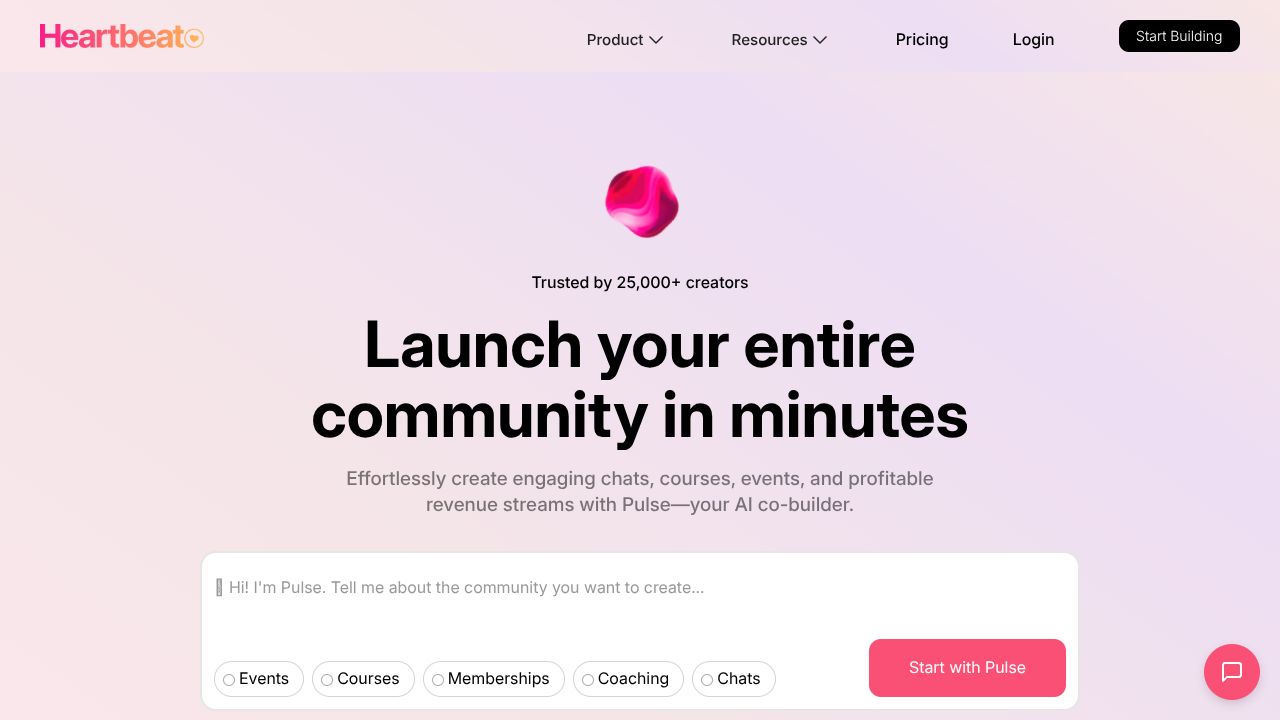
Build a Steady Pulse with Heartbeat: A Step-by-Step SaaS Guide
Community engagement is no longer a manual labor problem.
In the traditional SaaS growth model, community management was a resource sink that required full-time moderation to prevent "ghost town" syndrome. For years, builders have been forced to choose between the chaotic noise of Slack or the premium price tags of platforms like Circle. Heartbeat disrupts this dichotomy. By leveraging AI-driven member pairing and automated workflows, it shifts the burden of engagement from the founder to the platform itself. Our analysis at SaaS & Chill suggests that for "busy builders" looking to scale peer-to-peer learning without increasing headcount, Heartbeat offers the highest ROI on engagement-per-click currently available in the market.
Architecture 101: Mapping Your Community Blueprint
The onboarding process in Heartbeat is designed for speed, but as an analyst, I recommend a structured approach to your initial configuration. Upon signing up at Heartbeat, your first objective is "The Vibe Check"—defining your space hierarchy.
Unlike Discord’s overwhelming channel lists, Heartbeat uses "Groups" and "Threads." Start by whitelabeling your domain immediately under the settings tab. This move is critical for SaaS founders; keeping your community on community.yourstartup.com rather than a third-party subdomain preserves your brand equity and improves SEO. Once your domain is mapped, set up your "Onboarding Flow." This allows you to collect specific data points—like "Current Revenue" or "Tech Stack"—which will fuel the AI engine later.
The Engine Room: Features That Drive Retention
To move beyond a simple chat room, you must leverage Heartbeat’s automated infrastructure. Here are the "Chill Picks" for high-impact features:
- AI Matchups: This is the platform’s "killer app." You can set rules to automatically pair members for 1-on-1 coffee chats or mastermind sessions based on shared interests or complementary skills. It’s networking on autopilot.
- The Matchmaking Workflow: Navigate to the "Matchups" tab and create a weekly cadence. For a SaaS community, pairing a "Founder" with a "Growth Marketer" creates immediate, tangible value without you needing to facilitate the introduction.
- Automated Workflows: Use the internal trigger system to send "Check-in" messages. If a member hasn't posted in 7 days, Heartbeat can automatically send a personalized DM or email to re-engage them.
- Points & Badges: Gamification is often over-engineered. Heartbeat keeps it simple. Assign points for "Meaningful Contributions" (replies) rather than just "Logins." This ensures the quality of discussion remains high.
Pro Tips for SaaS Professionals: Scaling the Unscalable
For those managing weekend projects or side-hustle SaaS products, the goal is "Passive Community Management." Use the Docs & Handbooks feature to host your product roadmap and FAQ. By integrating your documentation directly into the community platform, you reduce support tickets.
Another advanced move is utilizing the Custom Embeds. You can pull in data from your SaaS dashboard directly into a Heartbeat tab. If you’re building a fintech tool, imagine a "Leaderboard" tab within the community that pulls live data via API. This creates a "sticky" environment where users have a functional reason to log in every day.
Common Mistakes to Avoid
- Over-Categorizing Early: Don't create 20 channels on day one. A community with 50 members spread across 20 channels looks dead. Start with three: #Announcements, #General-Vibe, and #Ask-For-Help.
- Ignoring the Whitelabeling: Using the default Heartbeat branding screams "temporary project." If you want users to trust your SaaS, the community must feel like a native extension of your product.
- Manual Matchmaking: Many founders try to hand-pick introductions. Don't. Trust the AI Matchup algorithm. It’s more scalable and removes the "founder bottleneck."
How It Compares to Alternatives
In our rigorous testing, we’ve found that the "right" tool depends entirely on your community's maturity and your technical appetite.
- Heartbeat vs. Circle: While Circle is the industry standard for polished, high-ticket coaching programs, Heartbeat is significantly more cost-effective for startups. Heartbeat’s native AI pairing is also more robust than Circle's current offerings.
- Heartbeat vs. Slack: Slack is for work; Heartbeat is for growth. If you want to build a searchable knowledge base and foster deep peer-to-peer connections, Slack’s ephemeral nature will fail you.
- Heartbeat vs. Bettermode: Bettermode offers deep enterprise-level customization, but for "busy builders," the setup time can be a deterrent. Heartbeat wins on the "Easy Setup" metric.
Conclusion: Is Heartbeat Right for You?
If you are a solo founder or a small team looking to build a community that "runs itself," Heartbeat is our top recommendation. Its strength lies in its ability to facilitate peer learning through AI, effectively turning your members into each other's mentors. It’s the perfect fit for SaaS builders who want to focus on their code while the community thrives on autopilot. For those who prioritize ease-of-use and automated engagement over complex enterprise workflows, Heartbeat is the definitive choice.